Michael Ireland and Cassidy Williams talk about Ash Grove’s Innovative Approach to Safety.
Edited by Mark S. Kuhar

Front-line employees managing day-to-day operations in cement plants see first-hand the gaps in efficiency and safety practices. They are first to spot opportunities for improvements, as they know the ins and outs of the plants’ work and how they take on daily tasks. These improvement opportunities can increase safety, enhance efficiency, and lower costs.
American Cement Association member company Ash Grove lives by its core values that people, their character, performance, and innovation drive the industry forward. This ensures front-line employees are at the forefront of developing and implementing an innovative new process for continuous improvement.
Ash Grove’s Durkee Plant developed a mobile electronic bearing induction heater system, which improves worker safety and plant efficiency. They replaced a high-risk, open-flame process with a safer, more efficient solution for heating bearings. Through this, the team demonstrated how collaborative problem-solving can transform everyday operations.
Their approach stands as a model for the industry and was recently recognized with an American Cement Association 2025 Safety Innovation Award.
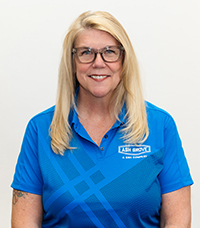
Michael Ireland, CEO and president of the American Cement Association, the national association representing U.S. cement manufacturers, sat down with Cassidy Williams, safety manager at Ash Grove’s Durkee facility, to talk about this innovative approach to safety.
Michael Ireland: Cassidy, can you give us an overview of this effort and what drove your team to develop the new tool?
Cassidy Williams: At Ash Grove, one of our values is people. People are our priority, and we care for each other’s safety and well-being. This project really reflects our mission to reduce employee risk and enhance operational flexibility across our facility. What was ultimately developed is a portable electronic bearing induction heater, eliminating risk from our maintenance processes. However, what is really interesting is how this came about. We found this solution by getting a group of employees from different departments together and asking a simple question: “If you could change one thing to improve safety, what would it be?” The response was straightforward: nobody wanted to be exposed to the heating methods that had been the standard approach. It wasn’t what we expected to hear, but that simple question led to an idea that made a big impact.
MI: Tell us about the “old way” of doing things. What exactly were the risks your team was facing?
CW: Our practice was to heat bearings in an open 55-gal. barrel of oil while using an open flame. The process was essentially creating a controlled fire risk in an industrial environment. This involved exposed flames, hot oil, and the potential for spills or burns. It’s a high-risk task, but the former practice was established and “how things have always been done.”
MI: That sounds like exactly the kind of challenge our industry needs to address. We want to encourage more innovation just like this to find new, leading ways to keep the workforce safe. How did you approach the solution?
CW: We were challenged by our regional management team to enhance efficiency and operational flexibility across our operations, and our Maintenance Department suggested this modification to our current process. The key was how we implemented it: we created a “learning team,” which brings together employees from engineering, maintenance, training, and other departments. Everyone sat down together to figure out the most effective and efficient way to implement this change. The Training Department helped develop our training plan and worked through safety parameters and fire mitigation planning. It was only when everyone was aligned that we started a pilot program using three team members for the first installations.
MI: Why is this new induction heater so much better than the old way of doing things?
CW: It’s a complete game-changer. The electronic induction heater is mobile, so we can take it where the work is needed and improve efficiencies by reducing the need to bring bearings into the workshop. It uses controlled, flameless electric induction to heat bearings and therefore removes oil, open flames, and reduces fire hazards. Manual handling risks of transportation are also reduced. The process has completely eliminated a high-risk task in our Maintenance Department. But beyond safety, we’re seeing real operational benefits, too. Given that this device is portable, we can also use it at job sites.
MI: Can you quantify some of those benefits for us?
CW: Absolutely. We’ve seen a reduction in bearing heating time and manpower requirements for this task. The mobility of the heater also reduces the need to transport heavy or hot materials, which decreases the potential for material handling injuries. And there’s an environmental benefit, too: by eliminating oil use, we’ve also eliminated the need to manage and dispose of hazardous waste from the old process.
MI: Does your team like this change?
CW: The response has been very positive. We have 100% buy-in from our staff, and that’s because of the ease, efficiency, and mobility of the new system. This solution came from frontline staff, and we believe that those closest to the hazard should have the largest voice. When you give people tools that make their jobs both safer and easier, adoption isn’t a problem; it’s a relief. The process is now seamless.
MI: It sounds like there’s really no downside to this. What would you say to other cement plant managers who might be dealing with similar maintenance procedures?
CW: Start with that simple question we asked: “What would you change?” Don’t assume that dangerous tasks are just part of the job. Challenge your teams to identify what could work better, what could be safer, or what could be more efficient. The solutions don’t have to be complex or expensive. Our induction heater is a modification of existing tools and technologies. But the impact of eliminating fire hazards, reducing injury risk, and improving efficiency is huge.
MI: Any advice on how to be successful when implementing new tools or processes?
CW: Involve multiple departments from the start. Our learning team approach was crucial because it brought different perspectives and expertise together. Engineering knew the technical requirements, maintenance knew the practical challenges, and training knew how to get everyone up to speed safely. Don’t try to solve these challenges in isolation. The best innovations come from collaborative thinking.
MI: As we wrap up, what’s your message to the broader cement industry about pursuing these kinds of safety innovations?
CW: I encourage my colleagues to adopt similar innovations or invite their teams to identify what could work better in their plants. Every facility has processes that could be safer, more efficient, or both. The key is creating an environment where employees feel comfortable identifying risks and proposing solutions. When you do that, you’ll be surprised by the simple ideas that can make a big impact, just like ours did.
MI: Cassidy, thank you for sharing this inspiring example of how our industry can prioritize both safety and efficiency, and for finding solutions by leveraging our most valuable tool – our workforce. We are excited to see this idea spark even more innovation throughout the cement industry and beyond.